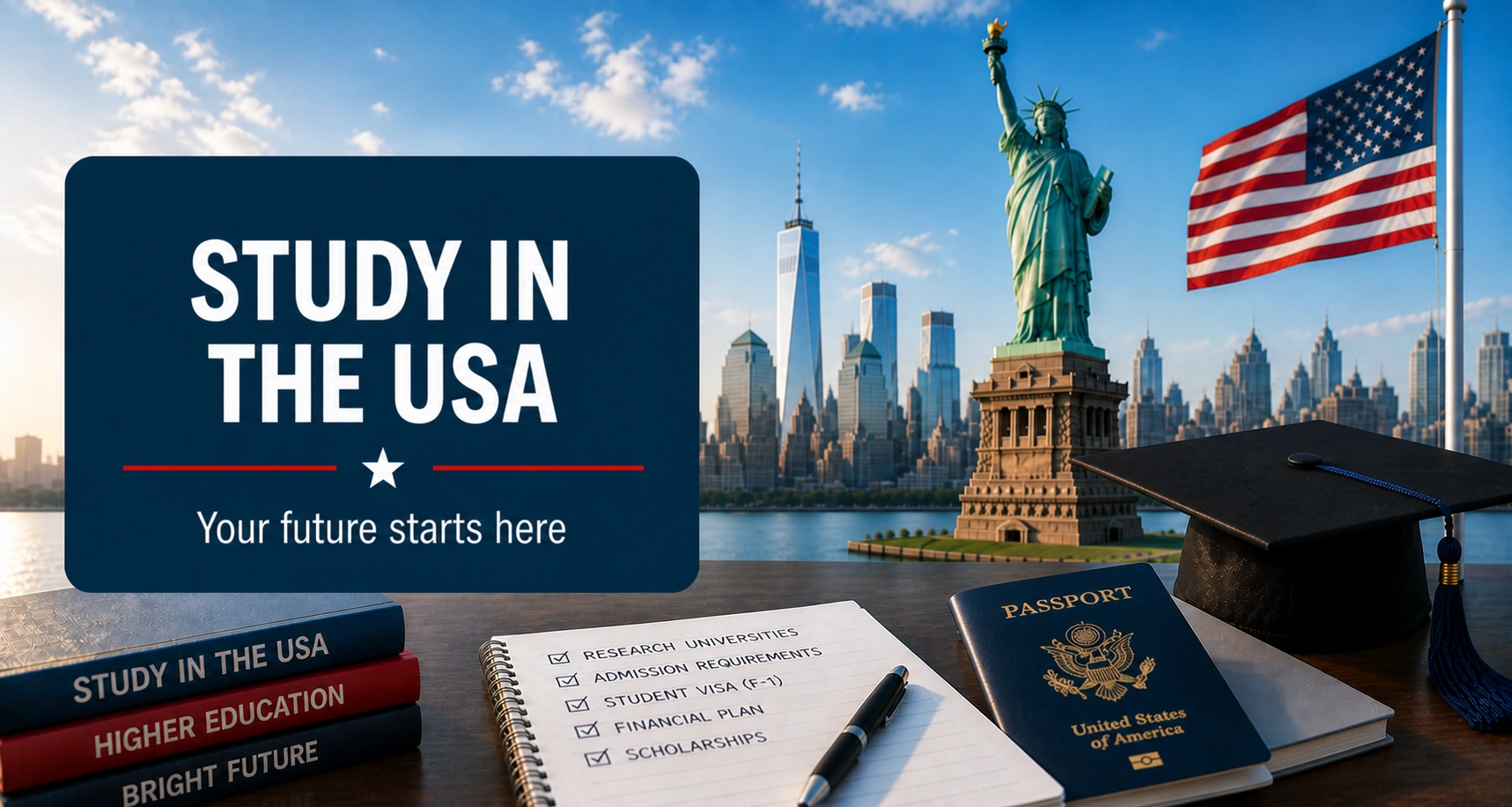
Study in the United States: from school choice to status maintenance
A 19-chapter administrative guide to the student pathway: SEVP-certified schools, Form I-20, I-901 fee, DS-160, consular interview, CBP admission, F-1 or M-1 status, CPT, OPT and STEM OPT.
Official sourcesApplying from abroadSummary PDF19 chapters
F-1academic study
I-20SEVIS certificate
30 darrival window
DSOcampus official
Scope
1. Purpose and audience
This guide is for people planning full-time study in the United States in a nonimmigrant status. It explains the administrative path, documents, agencies and compliance risks. It is not legal advice, consular representation or a substitute for your school's instructions.
Categories
2. F-1, M-1 and J-1: three different tracks
F-1
Academic full-time study at an SEVP-certified school, including universities and approved language programs. Employment is limited.
M-1
Vocational or technical training, with stricter work and extension rules.
J-1
Exchange visitor program through a designated sponsor. It is not an automatic substitute for F-1.
SEVP
3. Choose an SEVP-certified school
Only an SEVP-certified school may issue a valid Form I-20 for F-1 or M-1 status. Verify the institution in the official School Search before committing major funds.
Form I-20 records your school, program, dates and funding. The Designated School Official creates and updates your SEVIS record, signs travel authorizations and advises on status obligations.
SEVIS
5. I-901 SEVIS fee
After receiving the I-20, most F and M students must pay the I-901 SEVIS fee before the visa interview. Amounts and exceptions must be checked on the official payment site.
The DS-160 is the online nonimmigrant visa application. Prepare your passport, compliant photo, I-20, SEVIS receipt, financial evidence and travel information. MRV fees and appointment rules vary by post.
The consular officer reviews your academic plan, funding, English ability, prior history and ties outside the United States. A visa allows travel to a port of entry, but CBP decides admission.
Admission
8. U.S. entry: CBP and the 30-day window
Initial F or M students generally must not enter more than 30 days before the I-20 program start date. After arrival, check your I-94 online and correct issues quickly.
9. Maintain status: full course load, address, compliance
Status maintenance generally requires full-time enrollment, current address, no unauthorized work and prompt DSO contact for program changes, breaks, delays, travel or problems.
On-campus work may be possible under conditions. CPT must relate to the curriculum and be authorized by the DSO. Standard OPT can provide up to 12 months, while STEM OPT can add 24 months for qualifying degrees and employers.
SEVP transfers, level changes and program extensions must be coordinated with the DSO before program end dates. Form I-539 may be needed for certain changes or extensions of status.
Before leaving the United States, verify passport, visa, active SEVIS status and DSO travel signature on the I-20. Status violations or an expired visa can complicate reentry.
Practical
13. Health insurance, housing, campus compliance
Many schools require health insurance. Compare campus rules, housing options, fees, vaccinations, banking and international student resources before arrival.
France
14. Applying from France: official instructions
Applicants in France should follow the U.S. Embassy instructions for student visas: DS-160, payment, appointment, documents and timing. Tax, ITIN and authorized work questions require separate review.